Dental Implants: The Permanent Solution to Restore Your Smile and Confidence
Dental implants are considered one of the latest and most important medical solutions for replacing missing teeth. They provide a permanent, durable, and natural-looking option. Whether you are missing a single tooth or multiple teeth, dental implants not only improve the appearance of your smile but also help restore your ability to chew and speak with confidence and comfort.
What Is a Dental Implant Procedure?
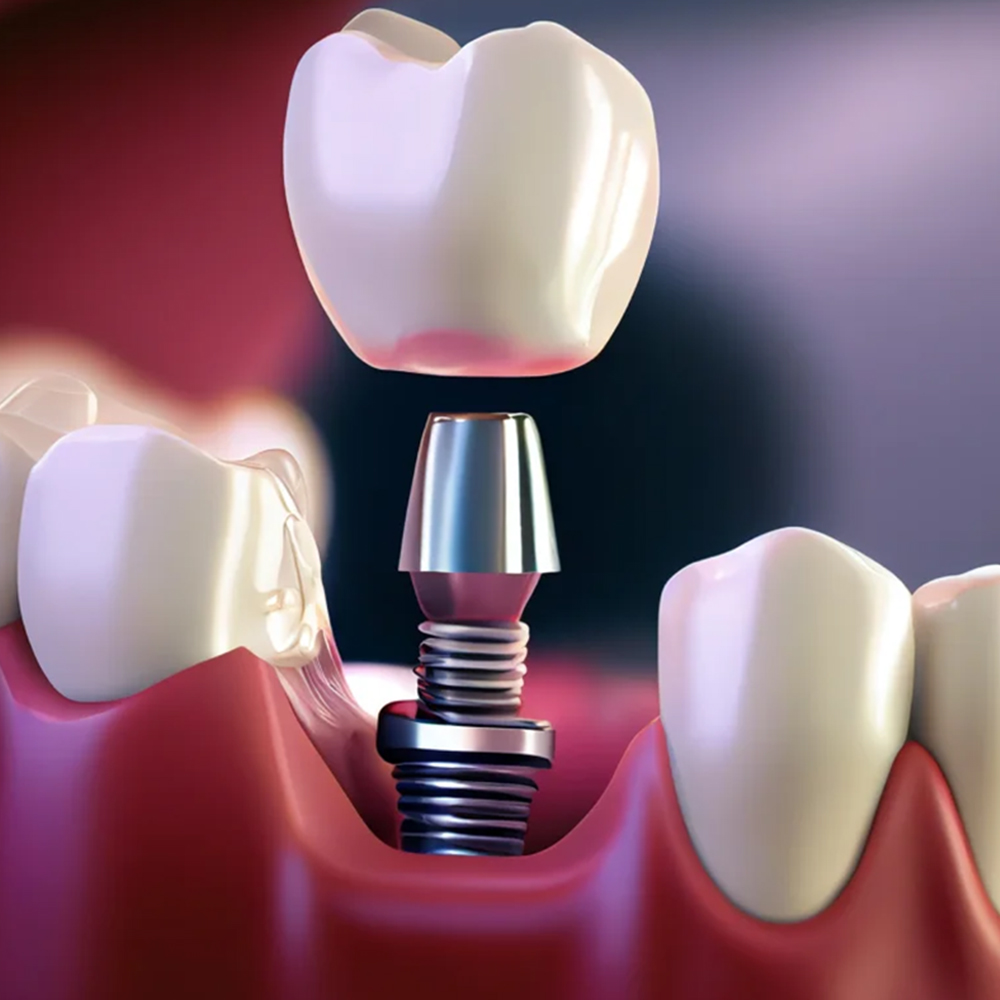
Dental implants are a modern medical procedure used to replace missing teeth in a permanent and natural-looking way. This technique involves placing a small titanium post into the jawbone to act as an artificial tooth root. A dental crown is then placed on top to mimic the shape and function of natural teeth.
Dental implants also help restore your smile, improve chewing and speaking abilities, and preserve the jawbone by preventing bone loss, which helps maintain oral health and the aesthetic appearance of your smile.
Advantages of Dental Implants
Natural appearance similar to real teeth
Strong stability without movement or slipping
Preservation of the jawbone and prevention of bone loss
Improved ability to chew and speak
A long-lasting solution that can last for many years
Does not affect adjacent teeth
Book your free consultation today
You can easily book an appointment by filling out the form, and our team will contact you to schedule your free consultation.
If a patient is not an immediate candidate for dental implants, additional treatments may sometimes be required to improve their condition before proceeding with the procedure. In other cases, the dentist may recommend suitable alternatives such as fixed bridges or removable dentures, based on a comprehensive clinical evaluation.
Medical Condition
Suitable Candidate
Requires Further Evaluation
Missing one or more teeth
Yes
–
Good general health
Yes
–
Adequate jawbone volume to support the implant
Yes
–
No active periodontal (gum) disease
Yes
–
Severe periodontal disease
–
Yes
Insufficient jawbone density
–
Yes
Uncontrolled chronic medical conditions
–
Yes
Some conditions that require further evaluation can be treated first,such as periodontal (gum) treatment or bone grafting—after which dental implants can be successfully placed based on the dentist’s clinical assessment.
Steps of Dental Implant Procedure
Examination and Treatment Planning
The dentist examines the mouth and teeth and performs X-rays or 3D imaging to evaluate the condition of the jawbone and determine the optimal placement of the implant. A personalized treatment plan is then developed.
Jawbone Preparation (If Needed)
In some cases, a bone graft may be required if the jawbone is not sufficient to support the implant. This procedure helps strengthen the bone and provides a stable foundation for the implant.
Implant Placement
A titanium post is placed into the jawbone under local anesthesia. This post acts as an artificial tooth root and serves as the foundation on which the crown will later be fixed.
Healing Period and Osseointegration
After implant placement, the bone requires time to heal and integrate with the implant. This phase, known as osseointegration, typically takes between 3 to 6 months to ensure the implant is fully stable.
Placement of the Final Crown
Once the implant has fully integrated with the jawbone, an abutment is attached to the implant. A custom-made dental crown is then placed on top, designed to match the shape and color of natural teeth, providing the patient with a natural-looking smile and comfortable chewing function.
The procedure is performed under local anesthesia, so the patient does not feel pain during the surgery. After the implant, some mild discomfort or slight swelling may occur, but it is temporary and can be effectively managed with medications prescribed by the dentist.
The duration of dental implant treatment varies depending on the patient’s condition, but it is typically completed in multiple stages. The implant placement itself usually takes a short time (around 30 to 60 minutes per implant). However, the healing period—during which the bone integrates with the implant (osseointegration)—can take approximately 3 to 6 months. After that, the final crown is placed.